


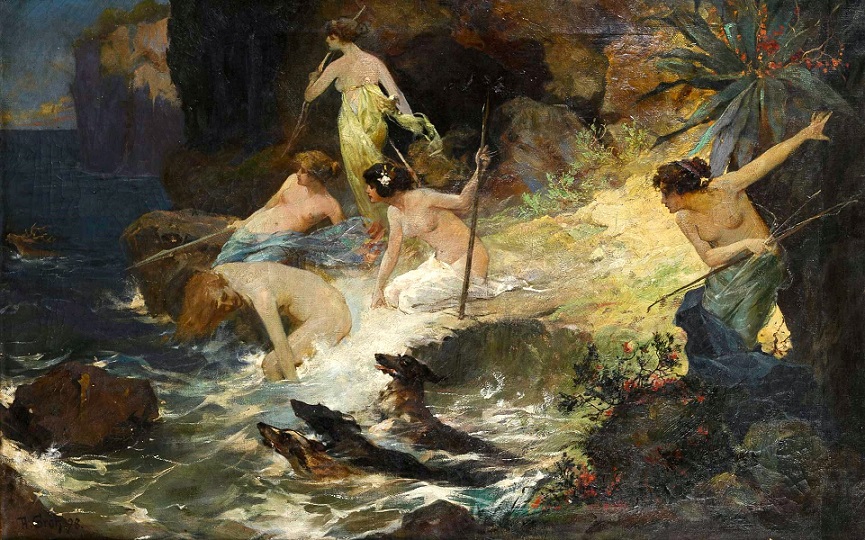

The Typology of Diana in Roman and Hellenistic Religion
The goddess Diana, as presented in Roman and Hellenistic religion, exhibits a typology that can be traced back to ancient Egyptian origins. The conventional interpretation of Diana as a patroness of the countryside, hunters, crossroads, and the Moon aligns with the broader mythological framework that Gerald Massey and other scholars have demonstrated to have roots in Egyptian cosmology and astronomy. The Egyptian goddess Isis, in particular, shares many attributes with Diana, including her association with the Moon and her role as a protector and guide.
The Astronomical Origins of Diana
The identification of Diana with the Greek goddess Artemis further solidifies the connection to Egyptian mythology. Artemis, like Diana, is closely associated with the Moon and the hunt. In Egyptian mythology, the Moon is often represented by the goddess Hathor, who is also associated with the sky and the stars. The correspondence between Diana/Artemis and Hathor is evident in their shared attributes and roles as lunar and celestial deities. As shown in the Book of the Dead, chapter 17, Hathor is depicted as a cow goddess who represents the celestial sky and the Moon, much like Diana in Roman mythology (Source: AncientEgyptVol2).
The Mythological Connection to Isis
The mythological narrative of Diana’s birth on the island of Delos to parents Jupiter and Latona, and her twin brother Apollo, can be reinterpreted through an Egyptian lens. The island of Delos is often associated with the Egyptian goddess Isis, who is also connected to the birth and protection of divine children. The story of Isis concealing the infant Horus from the wrath of Set parallels the narrative of Diana and Apollo’s protection and concealment. This typology appears in the Ritual as the protection of the divine child by the goddess, a theme that is central to both Egyptian and Roman mythology (Source: TheNaturalGenesisVol.2).
The Hunt and the Wilderness
The early Roman inscriptions celebrating Diana primarily as a huntress and patron of hunters can be traced back to the Egyptian goddess Nephthys, who is often associated with the hunt and the wilderness. Nephthys, like Diana, is depicted as a protector of the dead and a guide through the underworld. The correspondence between Diana and Nephthys is evident in their shared roles as protectors and guides, as well as their association with the hunt and the wilderness. As shown in the Pyramid Texts, Nephthys is invoked as a protector and guide for the pharaoh in his journey through the afterlife (Source: AncientEgyptVol1).
The Crossroads and the Moon
The association of Diana with crossroads and the Moon can be traced back to the Egyptian goddess Sekhmet, who is often depicted as a lioness and associated with the Moon and crossroads. Sekhmet, like Diana, is a protector and guide, and her association with the Moon and crossroads is a common theme in Egyptian mythology. The correspondence between Diana and Sekhmet is evident in their shared attributes and roles as protectors and guides, as well as their association with the Moon and crossroads. As shown in the Book of the Dead, chapter 148, Sekhmet is invoked as a protector and guide for the deceased in their journey through the afterlife (Source: AncientEgyptVol2).
The Independent Origin in Italy
The independent origin of Diana in Italy can be reinterpreted through an Egyptian lens. The Egyptian goddess Bastet, who is often associated with the home and protection, shares many attributes with Diana, including her role as a protector and guide. The correspondence between Diana and Bastet is evident in their shared attributes and roles as protectors and guides, as well as their association with the home and protection. As shown in the Pyramid Texts, Bastet is invoked as a protector and guide for the pharaoh in his journey through the afterlife (Source: AncientEgyptVol1).
Conclusion
The typology of Diana in Roman and Hellenistic religion can be traced back to ancient Egyptian origins. The correspondence between Diana and Egyptian goddesses such as Isis, Nephthys, Sekhmet, and Bastet is evident in their shared attributes and roles as protectors and guides, as well as their association with the Moon, the hunt, the wilderness, and the crossroads. The mythological and astronomical origins of Diana can be reinterpreted through an Egyptian lens, demonstrating the profound influence of Egyptian cosmology and astronomy on Roman and Hellenistic religion.
Sources
- AncientEgyptVol1
- AncientEgyptVol2
- TheNaturalGenesisVol.2
MythWisdom Blog Post
📚 Recommended Resources

As an Amazon Associate, we earn from qualifying purchases.
@media (max-width: 768px) {
.tbe-affiliate-section {
padding: 25px 15px !important;
}
.tbe-affiliate-section > div:nth-child(2) {
grid-template-columns: 1fr !important;
gap: 20px !important;
}
.tbe-product-card {
width: 100% !important;
}
}



Leave a Reply