



Introduction
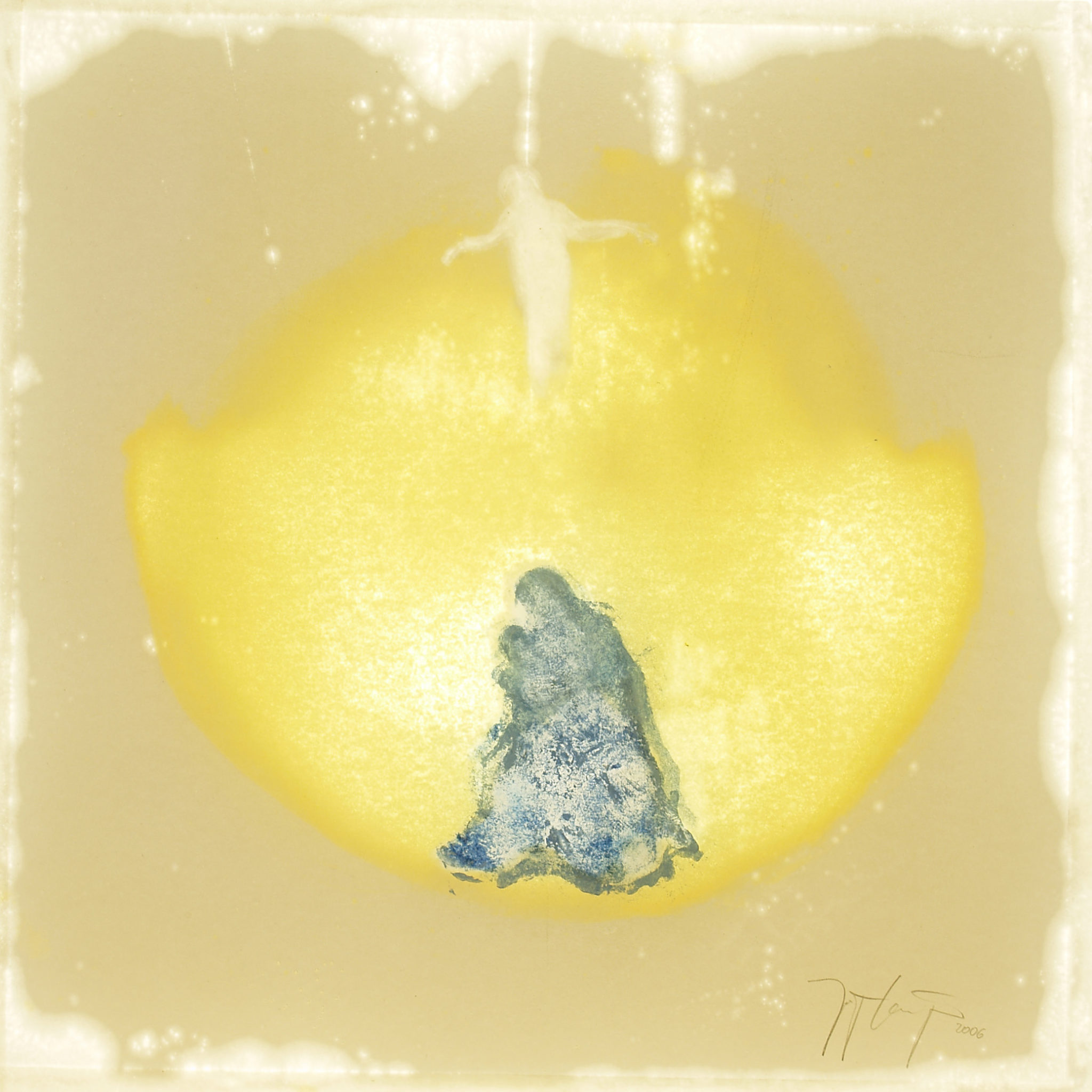
The contemporary artistic representation of the Nativity and Entombment of Christ, as depicted in Jörg Länger’s Chr. Geb., invites a deeper exploration of its symbolic roots. This commentary will trace the typological origins of the ‘Word made flesh’ concept to ancient Egyptian mythology, demonstrating how the Egyptian eschatology and cosmology underpin the Christian narrative.
The Egyptian Origins of the Incarnation
The idea of the ‘Word made flesh’ is not an innovation of Christian theology but finds its roots in the ancient Egyptian concept of the divine Word, or Hu. In Egyptian mythology, Hu was the embodiment of the creative power of the gods, particularly associated with the god Thoth, who was the scribe of the gods and the lord of divine words (Source: AncientEgyptVol1). The Egyptian Ritual (ch. 71) addresses the Lord of Heaven who ‘reveals himself, who derobes himself, and presents himself to the earth’ in the person of Horus, the divine hawk or soul that pierces through the veil of the tabernacle (Source: AncientEgyptVol2).
The Egyptian origin of this symbol can be demonstrated by the correspondence between the Egyptian Horus and the Christian Christ. Horus, as the divine child, was often depicted as the embodiment of the divine Word, the Hu, which was believed to have the power to create and sustain life. This typology appears in the Ritual as the divine child who is the ‘food which perisheth not’ and the ‘self-originating force’ (Source: AncientEgyptVol2).
The Symbolism of the Nativity and Entombment
The Nativity scene, as depicted in Matthias Grünewald’s Isenheim Altarpiece and Fra Angelico’s Entombment of Christ, is rich with symbolic elements that can be traced back to Egyptian mythology. The Egyptian goddess Isis, who was often depicted with her child Horus, represents the divine mother who gives birth to the divine child. The Egyptian god Osiris, who was killed and resurrected, represents the cycle of death and rebirth, which is echoed in the Christian narrative of the death and resurrection of Christ (Source: AncientEgyptVol1).
The Egyptian origin of the Nativity scene can be further demonstrated by the correspondence between the Egyptian goddess Nut, the sky goddess who was often depicted as a woman arching over the earth, and the Christian Virgin Mary. The Egyptian goddess Nut was believed to give birth to the sun god Ra, who was often depicted as a child in a manger, symbolizing the birth of the new sun. This typology appears in the Egyptian Book of the Dead, where the deceased is identified with the sun god Ra and is said to be ‘born again’ (Source: AncientEgyptVol1).
The Eschatological Significance
The eschatological significance of the Nativity and Entombment scenes is rooted in the Egyptian belief in the afterlife and the cycle of death and rebirth. The Egyptian god Osiris, who was killed and resurrected, represents the cycle of death and rebirth, which is echoed in the Christian narrative of the death and resurrection of Christ. The Egyptian Book of the Dead contains numerous spells and incantations designed to ensure the resurrection of the deceased, which is echoed in the Christian belief in the resurrection of the body (Source: AncientEgyptVol1).
The Egyptian origin of the eschatological significance of the Nativity and Entombment scenes can be demonstrated by the correspondence between the Egyptian god Osiris and the Christian Christ. Osiris, as the god of the underworld, was often depicted as a mummy, symbolizing the cycle of death and rebirth. This typology appears in the Egyptian Book of the Dead, where the deceased is identified with Osiris and is said to be ‘born again’ (Source: AncientEgyptVol1).
Conclusion
The contemporary artistic representation of the Nativity and Entombment of Christ, as depicted in Jörg Länger’s Chr. Geb., is rich with symbolic elements that can be traced back to ancient Egyptian mythology. The Egyptian origins of the ‘Word made flesh’ concept, the Nativity scene, and the eschatological significance of the Nativity and Entombment scenes demonstrate the profound influence of Egyptian mythology on Christian theology. This commentary has shown how the Egyptian eschatology and cosmology underpin the Christian narrative, providing a deeper understanding of the symbolic roots of the Nativity and Entombment scenes.
Sources
- AncientEgyptVol1
- AncientEgyptVol2
MythWisdom Blog Post
📚 Recommended Resources

As an Amazon Associate, we earn from qualifying purchases.
@media (max-width: 768px) {
.tbe-affiliate-section {
padding: 25px 15px !important;
}
.tbe-affiliate-section > div:nth-child(2) {
grid-template-columns: 1fr !important;
gap: 20px !important;
}
.tbe-product-card {
width: 100% !important;
}
}



Leave a Reply