The Mythicist School
Mythicism — The Case That Jesus Never Existed
From Gerald Massey to modern scholarship: the evidence that Christianity’s central figure is mythological — and the scholars who argue both sides.
Mythicism is the position that Jesus of Nazareth — as presented in the Gospels — is not a historical figure but a mythological construct. The MythWisdom Podcast examines this claim through the “Massey Method”: the forensic comparison of biblical stories with the older Egyptian, Mesopotamian, and solar myths they appear to adapt.
What is mythicism?
Mythicism argues that the Christian gospel narratives are symbolic literature built from pre-existing mythological material — Horus, Osiris, Mithras, Krishna, and a dozen other dying-and-rising gods — rather than memoirs of a Galilean preacher. Scholars like Gerald Massey, Robert M. Price, and Richard Carrier have each built different cases. Where Massey found direct Egyptian parallels, Carrier argues from silence in historical sources; where Price sees a patchwork of competing gospels, others see a single adaptable myth.
Who was Gerald Massey?
The English poet and Egyptologist Gerald Massey (1828–1907) pioneered the “Egyptian origins” school: the claim that the Hebrew scriptures and the New Testament are largely re-mythologized Egyptian doctrine — that the “historical” Jesus is really Horus, the son of the virgin Isis, born at the winter solstice, surrounded by twelve disciples, baptized in a river, and raised from the dead. Massey’s four-volume Ancient Egypt, the Light of the World is the founding text of this tradition. The MythWisdom Podcast reviews Massey’s arguments line by line — and puts them against his sharpest critics, past and present.
Was Jesus based on Horus?
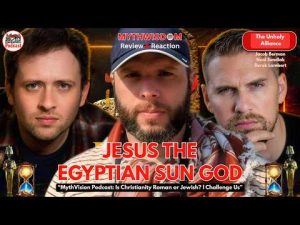
The “Horus parallel” is the most famous claim in mythicism: the Egyptian god was born of a virgin (Isis), his birth announced by a star, visited by three kings, baptized by Anup the Baptizer, tempted in the desert, crucified between two thieves, and resurrected after three days. Critics say the parallels are stretched; defenders say the correspondences are too systematic to be coincidence. Our episodes on Gerald Massey vs. Bart Ehrman and the gospel origins debate lay out both sides with the primary sources.
Mythicism vs. Historicism
Historicism — the mainstream academic view — holds that a real Jesus existed and was later mythologized. Mythicism holds the reverse: the myth came first, and the “history” was written onto it. The debate defines modern biblical scholarship: Ehrman, Vermes, and Sanders on one side; Price, Carrier, and the ghost of Massey on the other. The MythWisdom Podcast treats both sides seriously — and shows where each argument succeeds and where it fails.
Start below with the episodes, then read the books, then decide for yourself.
Key Mythicism Episodes



The evidence is in the sources — not the summaries.
New episodes every week on the MythWisdom Podcast. Watch the full conversations, read the scholarship, and join the reclamation of the mythos.