Origins
Where Did the Gospels Come From? — The Gospel Origins Debate
Anonymous authors, late dates, and Egyptian mythic adaptation: the real history of Matthew, Mark, Luke, and John.
Nobody knows who wrote the four Gospels. They circulated anonymously for generations; the names Matthew, Mark, Luke, and John were attached later. That single fact opens the deepest question in biblical studies: where did these texts actually come from?
The four gospels: anonymous and late
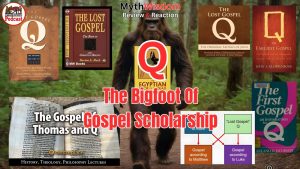
Mainstream scholarship dates the Gospels to 70–110 CE — decades after the events they describe, in Greek, outside the land of Israel. No eyewitness writes a word. Mark comes first; Matthew and Luke copy him and add material; John rewrites everything in a different theology. The “Q” source — the sayings both Matthew and Luke used — is a document no one has ever found.
The Gnostic and mythicist reading
The MythWisdom tradition argues that the gospel writers did not record history at all: they adapted older Egyptian and solar myths into a new narrative frame. Episodes on the True Gnosis series and our reviews of the gospel critics walk through the parallels verse by verse.
Why it matters
If the Gospels are myth in historical costume, the entire foundation of Christian historiography shifts. If they are history with mythic decoration, the mythicists are wrong. The debate — and the evidence — is what this hub collects.
Key Episodes



The evidence is in the sources — not the summaries.
New episodes every week on the MythWisdom Podcast. Watch the full conversations and join the reclamation of the mythos.