Description
Martin Bernal
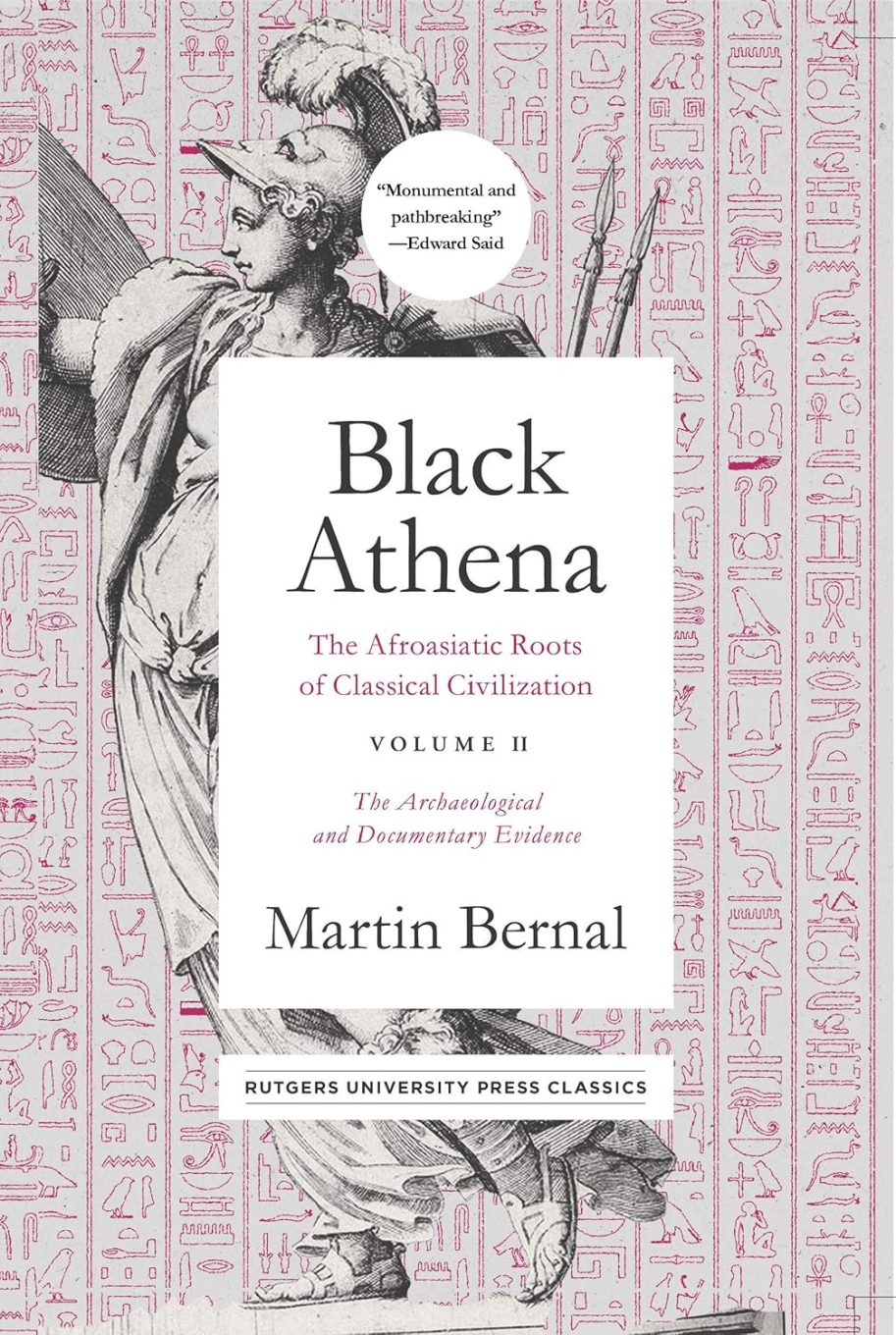
Winner of the 1990 American Book Award What is classical about Classical civilization? In one of the most audacious works of scholarship ever written, Martin Bernal challenges the foundation of our thinking about this question. Classical civilization, he argues, has deep roots in Afroasiatic cultures. But these Afroasiatic influences have been systematically ignored, denied or suppressed since the eighteenth century—chiefly for racist reasons. The popular view is that Greek civilization was the result of the conquest of a sophisticated but weak native population by vigorous Indo-European speakers—Aryans—from the North. But the Classical Greeks, Bernal argues, knew nothing of this “Aryan model.” They did not see their institutions as original, but as derived from the East and from Egypt in particular. In an unprecedented tour de force, Bernal links a wide range of areas and disciplines—drama, poetry, myth, theological controversy, esoteric religion, philosophy, biography, language, historical narrative, and the emergence of “modern scholarship.” This volume is the second in a three-part series concerned with the competition between two historical models for the origins of Greek civilization. Volume II is concerned with the archaeological and documentary evidence for contacts between Egypt and the Levant on the one hand, and the Aegean on the other, during the Bronze Age from c. 34000 BC to c. 1100 BC. These approaches are supplemented by information from later Greek myths, legends, religious cults, and language. The author concludes that contact between the two regions was far more extensive and influential than is generally believed. In the introduction to this volume, Bernal also responds to some reviews and criticism of Volume I of Black Athena.
Praise & reviews
Editorial Reviews Review "Martin Bernal’s Black Athena is nothing short of a monumental achievement in scholarship that re-oriented and transformed serious study of ancient civilizations. It remains a soaring accomplishment of classical erudition of the Afroasiatic foundation of Greek history." — Molefi Kete Asante ― author of The History of Africa, Professor, Department of Africology, Temple University "In a spectacular undertaking, Martin Bernal sets out to… restore the credibility of what he calls the Ancient Model of the beginnings of Greek civilizations… Bernal makes an exotic interloper in Classical studies. He comes to them with two outstanding gifts: a remarkable flair for the sociology – perhaps one should say politics – of knowledge, and a formidable linguistic proficiency… The story told by Bernal, with many fascinating twists and turns and quite a few entertaining digressions, is… a critical inquiry into a large part of the European imagination… a retrospect of ingenious and often sardonic erudition." — Perry Anderson ― The Guardian "An astonishing work, breathtakingly bold in conception and passionately written… salutary, exciting, and, in its historiographical aspects, convincing." — G. W. Bowersock ― Journal of Interdisciplinary History "A work which has much to offer the lay reader, and its multi-disciplinary sweep is refreshing: it is an important contribution to historiography and the sociology of knowledge, written with elegance, wit, and self-awareness… a thrilling journey… his account is as gripping a tale of scholarly detection and discovery as one could hope to find." — Margaret Drabble ― The Observer "Bernal's material is fascinating, his mind is sharp, and his analyses convince." — Richard Jenkyns ― Times Higher Educational Supplement "A formidable work of intellectual history, one that demonstrates that the politics of knowledge is never far from national politics." ― Christian Science Monitor "His book should be welcome to both classicists and ancient historians, most of whom will, now at least, be inclined to agree with him." — R. A. McNeal ― Franklin and Marshall College "Bernal's work and the stir it has occasioned have caused ancient historians and archaeologists to undertake a major reexamination of methods and motives." — Robert L. Pounder ― American Historical Review "Colossal…. Bernal aims to revise